
In the month when the World Energy Council (WEC) issued its 2026 World Issues Monitor, and when CERAWeek took place in Houston, geopolitics have been framing significant debates for the energy sector. In future blogs we’ll consider different aspects of the WEC report: power system capacity – grid constraints; power demand growth – electrification, and how UK businesses can protect themselves and respond to these issues. For this first blog in the series, we look at the Energy Trilemma – affordability, security, and sustainability – considering geopolitical influence over energy, and at how the debate is reshaping. Then we consider how UK businesses can balance these demands on a practical level, to focus on innovation and growth.
Security to the forefront
Even prior to CERAWeek – the ‘Super Bowl of energy’ – commentators were zeroing in on the relationship between the Trilemma and global politics. As Simon Casey wrote in Bloomberg’s Energy Daily,
“Remember the energy trilemma?
It was only a few years back that the challenge of trying to balance security, affordability and sustainability seemed like a relevant way of thinking about energy in the 21st century.
You’re unlikely to find many of the 10,000 or so delegates in Houston this week looking at things in quite that way now…
… If the Ukraine war was a wake-up call for Europe, then the Iran conflict and the near-closure of the Strait of Hormuz is a global alert, flashing bright red.
… As events of the past three weeks show, security trumps all other concerns.”[1]
2026 world energy issues
In the WEC 2026 report, launched 26th March, there’s one clear headline takeaway: the energy transition (sustainability) is now driven not by economics (affordability), but by geopolitics – in essence, security.
And the survey underpinning the report was conducted between November last year and January 2026, with commentary informed by consultation that took place before the end of February, all prior to the current conflict in the Middle East. Indeed, “Geopolitics has become the defining disruptor”, with peace and stability, trade, and supply chain security at the top of the list of global uncertainties, at 62.5%[2]. Looking specifically at European points of strain, peace and stability and supply chains were deemed critical uncertainties, while regional action plans across those surveyed included economic security, alongside storage and flexibility[3]. NB. This is at the macro, global level, but storage and flexibility are highly pertinent for individual businesses – as we look at later.
2025 – 2026: energy shocks and the shift to persistent stress
The report highlights several shocks for the energy sector from 2025, including the USA initiating withdrawal from the Paris Agreement; energy pressures in Europe; grid failure incidents (globally), and OPEC+ output shifts. And the last of these is a clear indicator of the volatility and uncertainty whereby geopolitics impacts energy security.
Fears of an oil glut last November led to eight members of OPEC+ to announce a halt in plans to increase oil production from January 2026 – creating an immediate climb in the price of crude oil[4]. As of 1st March 2026, considering the current political situation with USA / Israel and Iran, the cartel announced an increase in production by 206,000 barrels per day in April[5]. However, that increase and production levels are only true at the time of writing!
This suggests a need for a shift in thinking about the Trilemma, as the nuance of the interactions of competing pressures along with loss of credibility and trust move the debate to ‘how transitions can be delivered under constraint rather than declared in ambition alone.’[6]
Faultlines in the Trilemma – trade-offs and a rebalance?
Prior to the publication of the 2026 report, Dr Angela Wilkinson, secretary general and CEO of WEC took part in a roundtable in Aberdeen before delivering the annual Prosper lecture. In a blog, Dr Wilkinson indicates that we now face trade-offs between the elements of the Trilemma, positing that the need to ‘regularly rebalance priorities and refresh trade-offs is the best way to avoid flip flopping between climate-first, security-first, equity-first politics.’[7]
Looking at investment vs affordability, she suggests that, with the UK having some of the highest electricity costs in the developed world, sustainability – transition policies – drop down the public agenda and impact British industry.
Meanwhile, looking to transitioning of energy as an iterative process rather than a singular trajectory, it’s critical to note that energy demand is only growing. As a Barclays white paper from February observes, ‘Energy transitions are additive, not substitutive’.[8] The interplay of different countries’ situations, e.g. infrastructure, natural resources, and energy demand, all demonstrate the need to avoid the idea of a singular, monolithic energy transition – a straightforward path. And Barclays’ paper pinpoints issues with the traditional concept of the Energy Trilemma.
Reiterating the WEC notion of persistent stress, Barclays suggest that we should think of an energy hierarchy rather than a Trilemma, and this is particularly pertinent in a time of geopolitical uncertainty, i.e. a revision based on real-world, current circumstances. Ultimately, looking to the hierarchy,
“(w)hen systems come under stress, governments and voters prioritise security of supply first, affordability second, and sustainability third. The European energy crisis, rapid coal restarts, emergency consumer subsidies, and repeated policy reversals across OECD economies make this hierarchy explicit.”[9]
The real-world Trilemma: what does it mean for British businesses?
UK companies are already negotiating the Energy Trilemma, as it is traditionally understood. ESG strategies and procurement processes can each inform companies’ emphasis on sustainability: whether for competitive advantage, to maintain existing customer contracts, or to seek or retain investment and stakeholder buy-in. For sectors such as hospitality, retail, agriculture, and food & drink manufacturing, leading sector bodies are driving Net Zero goals more ambitious than the UK’s legally binding 2050 deadline.
Since the energy crisis hit in 2022, UK industry has been significantly impacted by energy affordability, with limited and narrow industry-specific government support to help meet the financial burden of rapidly spiralling or volatile energy costs. And energy security – or energy resilience – can halt day-to-day operations and / or inhibit investment and growth, particularly if grid constraints prohibit progress towards automation and electrification.
Ultimately, there is interplay across the Trilemma: increased sustainability can help drive down energy spend, while improved resilience can help speed-up investment and growth plans. But while energy affordability is the most significant priority for business – especially in the current economic climate – the ramifications of geopolitics and global energy security determine how affordable energy supply is at a national level.
Meeting the Trilemma challenge with battery storage – a flexible energy management asset
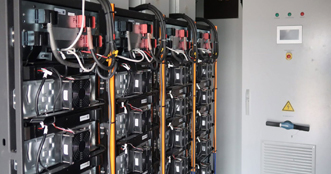
For businesses focused on innovation and growth, the apparently competing demands of the Trilemma can be difficult to balance. And, as noted above, each of these aspects can impact on other areas. While energy security may be the highest priority, at least at the policy level, businesses require a clear rationale and evidence – the business security – to justify investment in modern energy management technology. Battery Energy Storage Systems (BESS) can prove invaluable in addressing sustainability, security, and affordability, as a flexible asset that can help futureproof energy infrastructure while meeting immediate business demands.
Affordability:
A BESS can facilitate energy savings, which translate into cost savings. Charging a BESS at off-peak times means you can take advantage of lower grid energy prices, using this stored grid energy at peak times to minimise cost of centralised supply. At Powerstar, our BESS customers save more than 9% on average on their yearly energy costs.
Where companies with a BESS engage with grid payback schemes or participate in Demand Side Response, they can generate income through a new revenue stream – while helping to stabilise the grid and improve national energy security.
Peak shaving – the rapid reduction of energy consumption at times of peak demand – can help businesses avoid the possibility of punitive charges where there’s a risk of exceeding authorised capacity from the grid.
Sustainability:
When companies invest in on-site renewables to reduce dependence on grid supply, reduce energy spend, or help decarbonise their operations (i.e. for security, affordability and / or sustainability), a BESS helps ensure flexibility for these renewable assets, storing energy as generated for optimally efficient use. Thus, a BESS supports renewable energy integration while helping maximise ROI on these sustainability-driven assets.
Security:
Where there are localised issues with the reliability of grid supply, a BESS – if it incorporates Uninterruptible Power Supply (UPS) – can ensure area-wide power, protecting processes, equipment, and data in the event of grid disruptions. Where companies incorporate traditional UPS in their energy infrastructure, the inefficiency of outdated technology loses significant capacity – even when idle – exposing these companies to energy pricing volatility. A modern BESS with UPS, in comparison, has significantly lower energy loss. For a 1MW system, this can equate to £200,000 cost savings per annum.
A proactive approach to the Trilemma: BESS technology in action
At Powerstar, we’ve installed more than 40 BESS units, helping businesses in the UK and globally with behind-the-meter technology that impacts on all aspects of the Energy Trilemma – for cost savings, improved power resilience, and to help decarbonise operations.
Reducing Energy Spend and Protecting Against Blackouts
When Parkinson-Spencer Refractories were facing increasing threats to their energy security through grid supply disruptions, Powerstar were asked to advise on a solution which would improve on-site power resilience while also contributing to their sustainability goals and reduce operational spend, where blackouts had been costing between £20,000 and £100,000 per incident.
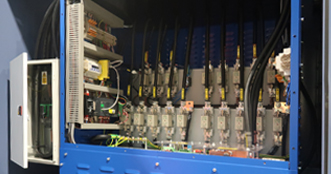
A Powerstar 250kW BESS, with a 500kVA MAX voltage optimisation (VO) system, now protects the site from the grid disruption that had been impacting their manufacturing processes and reduces energy costs by 5% through the VO. The BESS is improving sustainability and helping maximise ROI on on-site wind turbine generation. Grid balancing schemes (managed by Grid Beyond) have opened a new revenue stream.
Saving on Scrappage and Wastage with a Rapid Payback Time
For another client, an aerospace manufacturer, grid disruptions had been impacting operations and – given the precision and quality of processes and materials – this led to approximately eight material blocks a year being destroyed, with each block worth more than £150,000.
Powerstar’s 1MW BESS with UPS and integrated VO has protected the site from four power disruptions p.a. (on average), which gives a payback period of less than two years on the asset investment. The company is now able to participate in grid services to generate additional revenue to complement these cost savings and improved energy security.
While geopolitics impact global energy security and this flows down to the national and more local level, the flexibility of a BESS can enhance businesses’ energy management infrastructure – which, in turn, improves the affordability that is critical at the corporate, business management level. And, by improving efficiency and complementing renewables, sustainability is a fundamental benefit of a BESS.
While the Trilemma may be rebalancing, with security topping global priorities, a BESS can help ensure companies address all aspects of the Trilemma, without compromising on any individual priority.
For a deeper dive into how BESS technology supports UK businesses through energy transitions for growth and innovation, take a look at: https://powerstar.com/landing-page/charge-ahead-with-battery-energy-storage/
[1] https://www.bloomberg.com/news/newsletters/2026-03-23/ceraweek-iran-will-overshadow-everything-else-at-houston-oil-forum
[2] https://www.worldenergy.org/assets/downloads/IM26_-_Full_report.pdf
[3] Ibid p.16
[4] https://www.ft.com/content/60e0e850-98bd-4617-bce7-5de7d442d158
[5] https://www.nytimes.com/2026/03/01/world/middleeast/opec-plus-oil-production-prices.html
[6] https://www.worldenergy.org/assets/downloads/IM26_-_Full_report.pdf p.6
[7] https://www.worldenergy.org/news-views/entry/energy-systems-transitions-just-entered-their-hardest-phase-and-leadership-dialogue-is-struggling-to-keep-up
[8] https://home.barclays/content/dam/home-barclays/documents/news/Insights/Barclays%20Transition%20Realism%20White%20Paper%20February%202026.pdf
[9] Ibid p.12