

Preventative maintenance or transformer upgrades?
The fire at North Hyde shut down Heathrow Airport and lost power for more that 71,000 domestic and commercial customers. Although fire-related incidents in supergrid transformers are rare – the last in-service supergrid transformer fire was at Creyke Beck substation in 2013 – their impact makes headline news. In our latest blog, we look at transformer maintenance from findings at the supergrid level and Critical National Infrastructure sectors, through to the industrial transformers UK companies rely on for efficient, compatible power supply.
Delayed maintenance
In their final report into the North Hyde fire, NESO made a number of observations and recommendations pertaining to grid-level transformer best practice[1]. Missed opportunities and lack of basic, routine maintenance were signalled as the most likely causes of the fire and the massive disruption this created. Planned outages in 2021 and 2022 were both delayed, as other high-risk works were prioritised. Maintenance was rescheduled for September 2024 but this didn’t happen as an equipment defect occurred at the Iver 275kV substation, meaning that North Hyde had to secure the system, so couldn’t be taken out of service. Another delay to planned outage for maintenance – then scheduled for May 2025 – was subsequently postponed until November 2025 to optimise National Grid’s resource availability.
Critical National Infrastructure
The NESO report draws particular attention to issues of Critical National Infrastructure (CNI) and the sectors that are vital to the UK economy and national security. This is defined as “the critical elements of infrastructure (namely assets, facilities, systems, networks or processes and the essential workers that operate and facilitate them)..”[2]
The government CNI Framework identifies 13 sectors deemed critical to social and economic security, national security, and the proper functioning of the state: chemicals, civil nuclear, communications, defence, emergency services, energy, finance, food, government, health, space, transport, and water. There is a degree of interdependence between these critical sectors, but the report highlights energy security as a common theme, a common dependency, across all. At the national infrastructure level, NESO recommends collaboration and open communication between government and regulatory bodies to foster energy security and plan for continuity of operations in the event of loss of an energy asset.
While the issues interrogated through the report into the North Hyde transformer failure relate to large scale projects and networks, the same principles and issues face UK businesses, from PLCs to SMEs – particularly in the CNI sectors where Powerstar operates: chemicals, defence, energy and food, government, transport, water, and health. Our engineers have extensive expertise in transformer technology, and highlight some common causes of transformer failure, together with the preventative maintenance that can help your transformer operate safely and efficiently.
Transformer malfunction and preventative maintenance
Forensic analysis after the North Hyde incident demonstrated that failure on one of SGT3’s bushings led to the fire, with the most likely cause being moisture entering the bushing and causing a short circuit, leading to arcing, where sparks combined with air and heat to ignite the oil. This, in turn, damaged SGT1’s bushings, meaning that protection systems automatically took SGT1 and SGT2 out of service.
We look at these points of failure which are common across transformers at all scales, below. But, specific to North Hyde, lack of maintenance scheduling was key: oil samples taken from SGT3’s bushings in 2018 showed readings of a category 1 moisture level in one bushing – the highest level in the then-current guidance note ‘The Management of Bushings’, as at 2018, which indicates “an imminent fault… the bushing should be replaced.” Although the National Grid Electricity Transmission introduced a new internal procedure in 2020 relating to oil sampling, this did not include retrospective examination of previous records. Following the North Hyde incident, National Grid Electricity transmission have initiated an end-to-end review of oil sampling protocol, including a review of all previously-recorded samples.
At any scale, and whatever type of unit you have installed, transformer failure severely impacts business operations: production downtime, product loss and wastage, contractual penalties, reputational damage, and potential health and safety issues. Properly-scheduled and well-documented maintenance is infinitely preferable to waiting for failure. Avoiding the most common causes of transformer failure can be business-critical.
Moisture: Pinpointed as the cause of the North Hyde transformer fire, high moisture levels can cause irreversible damage to insulation, reduced dielectric strength, and can lead to corrosion. Routine oil testing can help detect moisture issues, while dessicants and breathers can help control humidity.
Oil contamination: Insulating oil is crucial and it dissipates heat, but oil can become contaminated with moisture and impurities. As with moisture levels issues, this can reduce dielectric strength and it can lead to overheating. Again, oil sampling can help detect contamination, while filtration can help remove foreign particles and hydration can help manage moisture.
Insulation: Deterioration of insulation – often caused by thermal or electrical stress – can lead to major transformer issues, including dielectrical strength reduction and partial discharge. Proper cooling can reduce thermal stress, while surge arresters and voltage regulation can reduce electrical stress.
Bushing failure: Bushings are a critical element within a transformer, for insulation and connection of conductors. Failure of bushings, whether caused by contamination or stress or – more simply – ageing, can significantly impact transformer integrity and safety, potentially leading to incidents akin to the North Hyde fire. As with other potential points of failure, the regular inspection, maintenance, and testing of bushings is essential to enable early identification of possible degradation or faults.
Partial discharge: Often caused by contaminated insulation, partial discharges further damage that insulation, potentially leading to transformer failure. Routine testing for partial discharge can bring these issues to light, to help ensure transformer longevity and efficiency.
Unbalance – overloading and underloading: When power supply is insufficient – when load exceeds capacity – this can lead to overheating, losses in windings, damage to insulation, and electromagnetic interference. Accurate calculation of load and transformer capacity from the outset, along with regular monitoring, can help mitigate these issues. Meanwhile, underloading can lead to transformer breakdown where power is not sufficient or where power is lost when there are high loads. Again, load calculations and monitoring are critical.
Overheating: There can be a number of reasons for a transformer to overheat, but each can lead to significant problems, including: damage to connectors, cores and insulation; premature ageing of components, and potential unit failure. Overloading and inefficient colling or poor ventilation are the major causes of transformers overheating, and so load management is critical to mitigate overheating as well as over- or under-loading. Temperature monitoring and regular oil testing can help mitigate this cause of potential failure.
Maintenance and age
From these causes of transformer failure, it’s clear that preventing moisture from entering the tank and monitoring oil condition and level are both crucial. Equally, visual checks – even as cursory as checking whether units are surrounded by overgrown shrubbery – can be obvious indicators of a poorly-maintained transformer.
Routine inspection: Any signs of wear and tear, any oil leakage, signs of corrosion and indications of overheating should be addressed when they arise to prevent further degradation and potential transformer failure. Bushings should be checked for any damage, and cooling systems should be checked to ensure they are functioning as needed – dust can easily block ventilation, creating completely avoidable overheating.
Scheduled transformer maintenance should include:
- Load monitoring and testing: to prevent overloading and avoid heat build-up and insulation degradation. Where load management can track real-time load, this can allow for load-shedding during peak usage periods.
- Oil testing and analysis: while this relies on the transformer being out of service for the duration, as North Hyde demonstrated this can be potentially cost-effective operational downtime. For preventative maintenance, monitoring dielectric strength and identifying contaminants and moisture at the earliest opportunity can allow for issues to be addressed before they become business-critical.
- Thermal scanning: where visual inspection alone cannot detect hotspots, thermal imaging can identify issues with load distribution, loose connections, and component degradation that could, potentially, cause overheating.
Regular maintenance is essential to maximise the performance and lifespan of any high-voltage transformer. That’s why we recommend scheduling annual checks. At Powerstar, our Planned Preventative Maintenance (PPM) programmes are designed to keep your transformer operating safely and efficiently, ensuring reliability throughout its lifecycle. Learn more about our Service offering here: Powerstar® – Service and Maintenance
The inevitable effect of ageing: The age of a transformer can severely impact its performance – and the age of the UK’s transformer fleet is something we’ve covered before (https://powerstar.com/how-ageing-transformers-cost-you-money). To accurately assess the lifespan of a transformer, rather than look at its age in years it is more accurate to consider cumulative operating hours: a transformer operating continuously at a high load will age faster than one working to weekday, daytime hours only.
But a transformer’s lifespan and potential for failure can be determined in three distinct phases:
- Early-stage failure: largely due to the wrong specification, damage to the unit prior to installation, or poor installation of the unit. Essentially, a lack of expert advice and service.
- Mid-life, normal wear: where failure can be due to poor maintenance, or to natural disasters – lightning strikes are probably the most common cause of sudden failure, in the UK.
- Ageing transformers, working beyond their design lifespan: even where this does not inevitably mean total failure, an ageing transformer does not offer optimum efficiency, will cost more – in energy losses and in unscheduled maintenance – than a considered approach to energy asset management.
Investing in efficiency
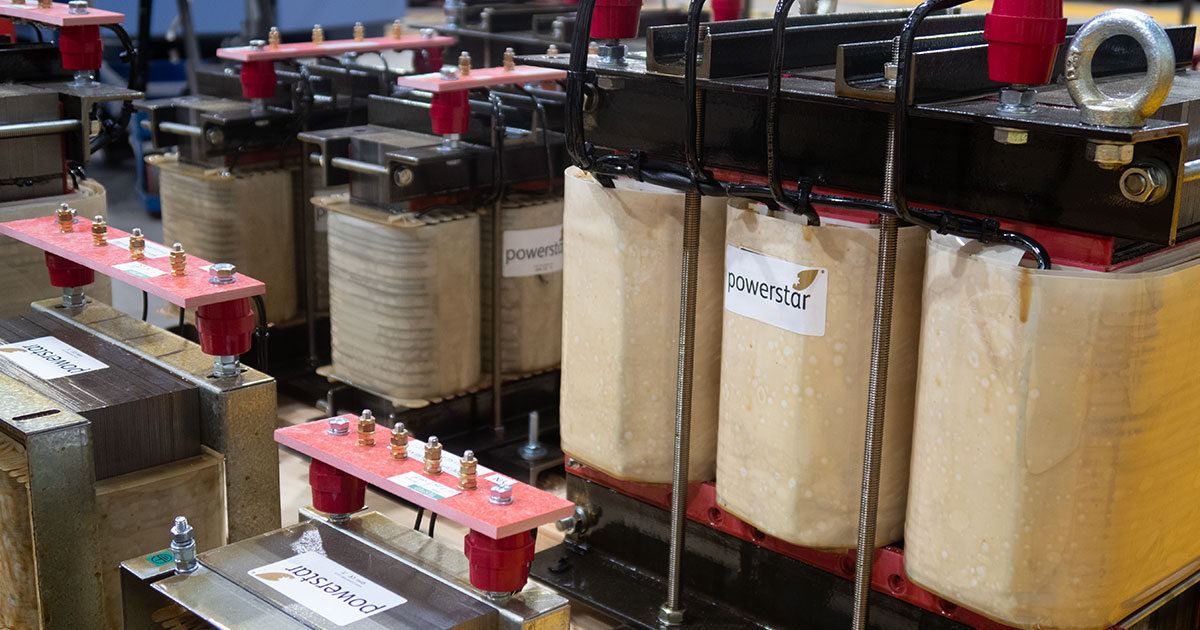
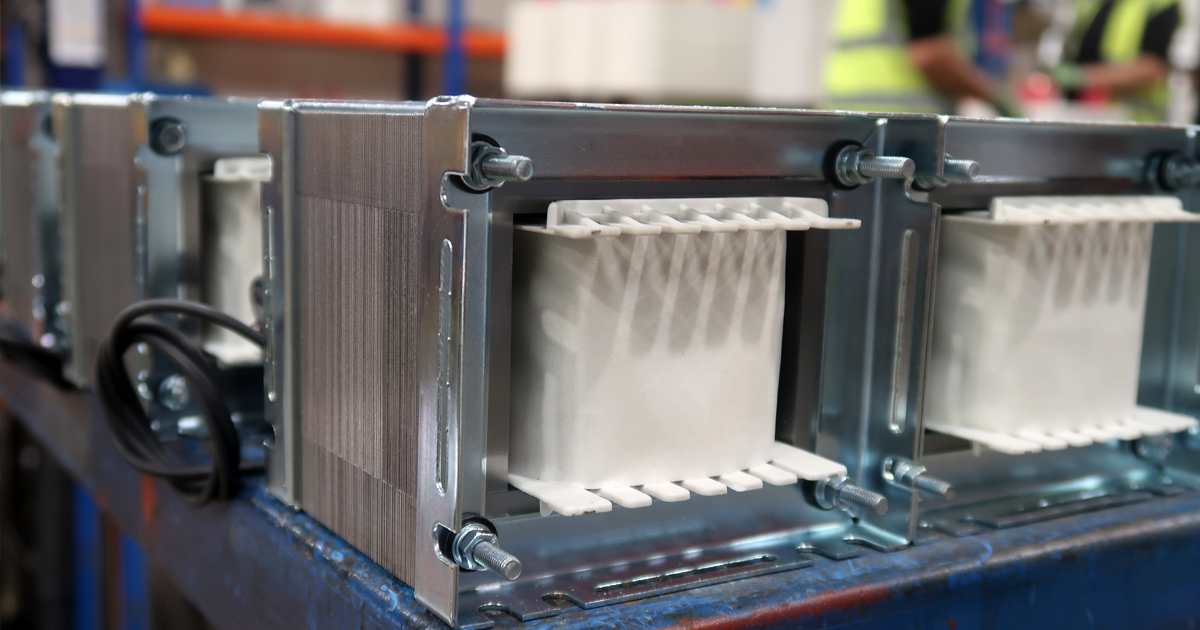
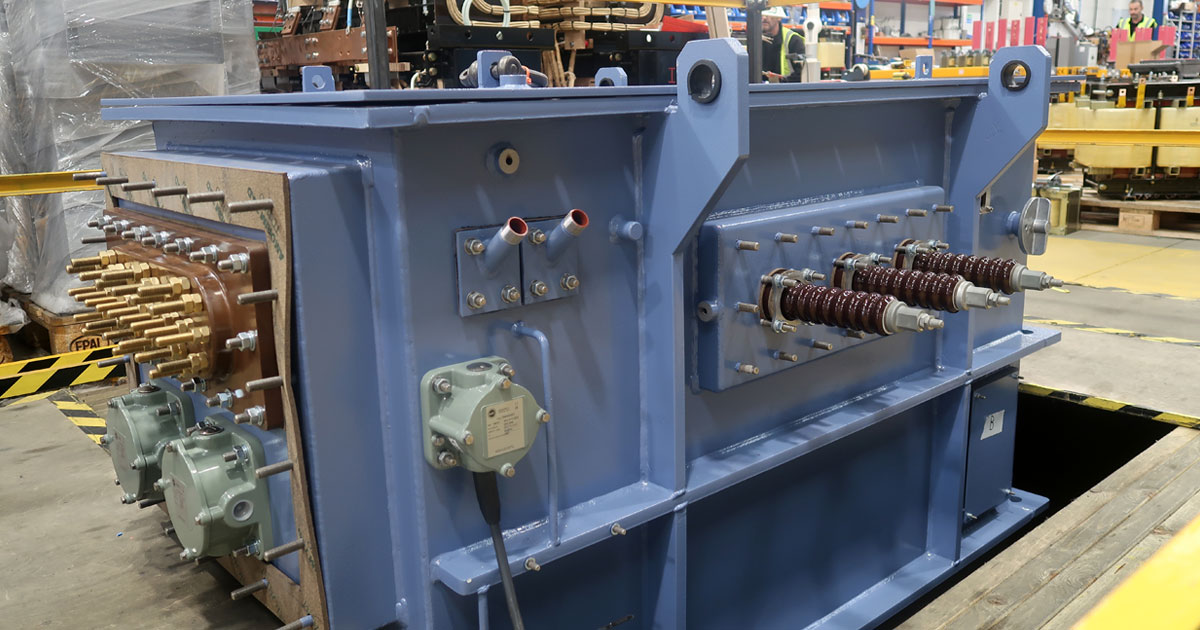
At Powerstar, we design and build bespoke transformers, to meet your business’ precise needs, including:
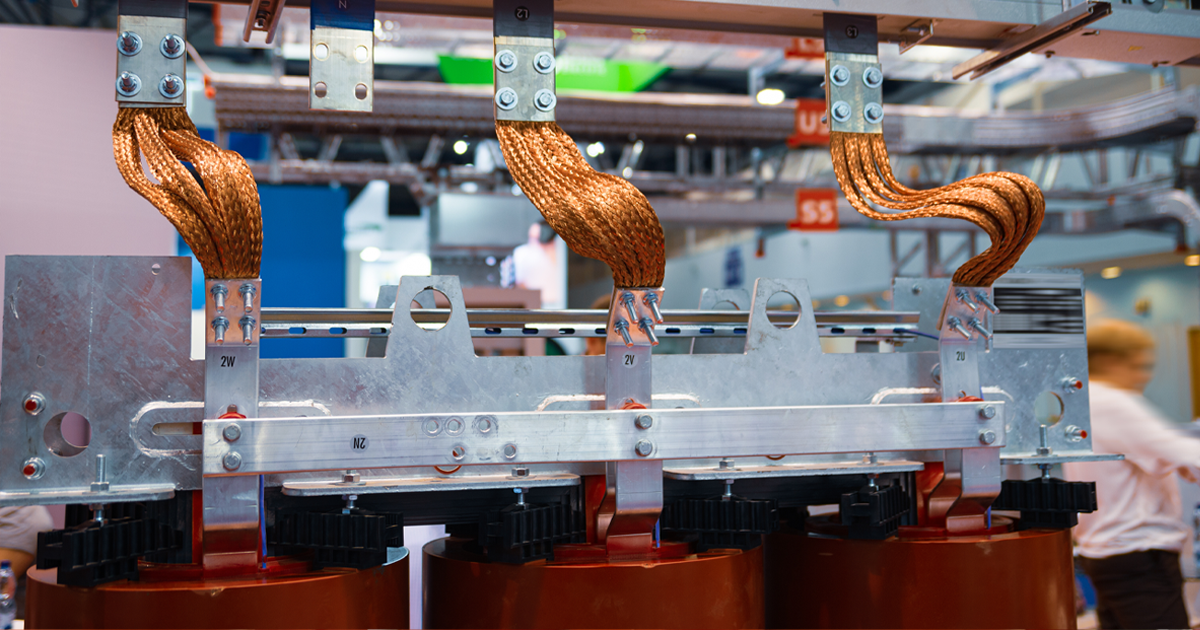
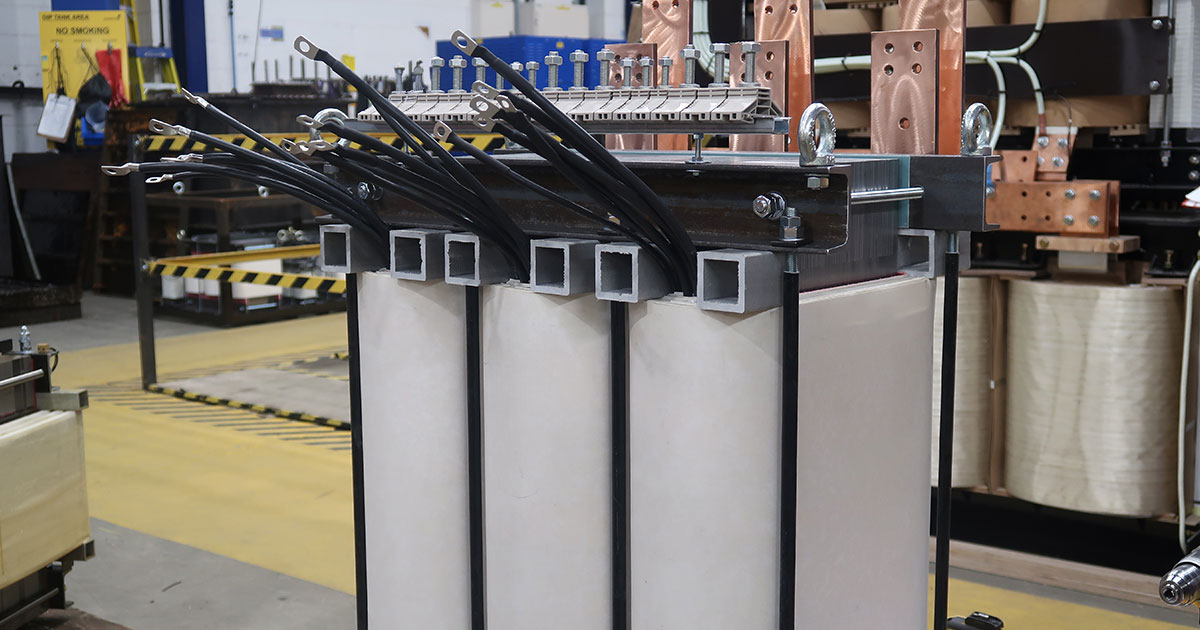
- Dry type transformers – ideal for commercial environments, hospitals and public sector organisations, these offer safe and reliable energy distribution where fire safety is critical.
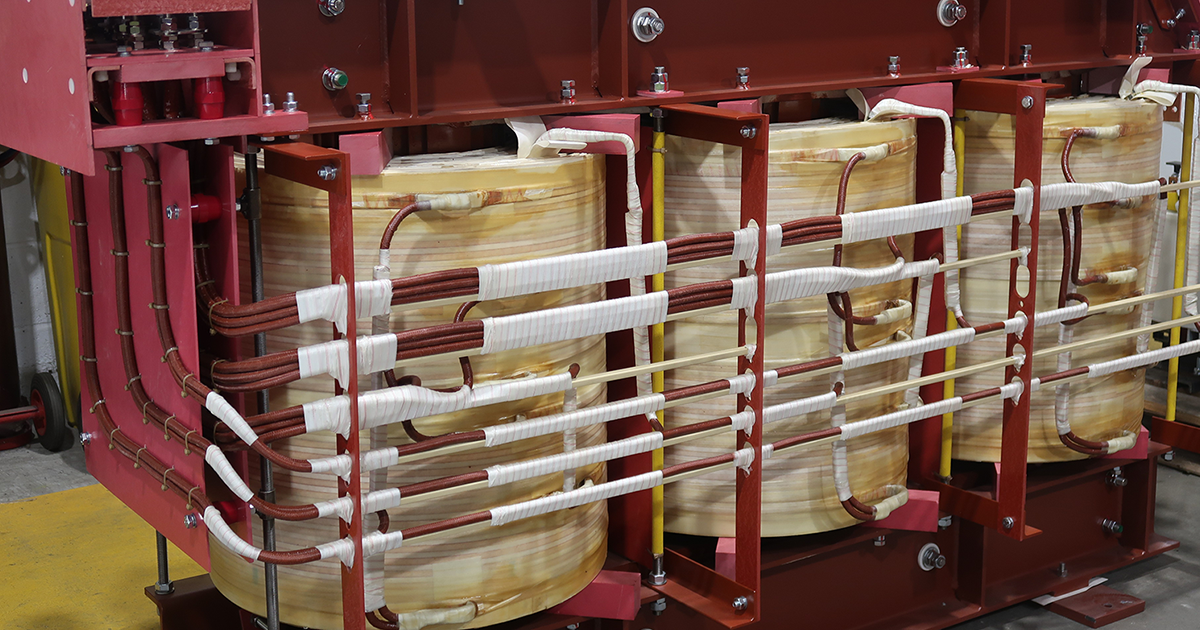
- Oil type transformers – commonly used in utilities, transport, and outdoor industrial applications these transformers use insulating oil to cool and protect the windings, enabling them to withstand extreme conditions and reliably supply power for high-voltage critical infrastructure.
- Amorphous core transformers – for renewable energy generation and energy-efficient operations, these reduce environmental impact, and are ideal for smart grid infrastructure and sustainable energy demands.
- Single phase transformers – ideal for small industrial sites, retail operations and smaller-scale supermarkets, these offer efficient and reliable power at a KVA range of 50VA – 630kVA.
Compared to the traditional transformers that still make up the bulk of the UK’s 230,000-strong fleet, our modern low-loss transformers offer 99.85% efficiency, a 70% reduction in core losses.

Transformer maintenance vs. upgrade – the cost of ageing
Proper maintenance can help ensure your transformer works as effectively as possible and help minimise the change of catastrophic failure. But the problem of ageing remains a major factor. At some point, the cost of maintaining an outdated transformer and the associated energy inefficiencies will be outweighed by the cost-savings and efficiencies of investment in modern transformer technology.
As a critical asset for many UK companies, transformers are often overlooked until they fail. The incident at North Hyde, while an extreme example, highlights the rationale for reviewing your transformer maintenance scheduling, and demonstrates the case for investigating a transformer upgrade.
[1] https://www.neso.energy/document/363891/download
[2] Ibid. p.40