


Last month, we looked at energy security as a global strategic priority. In this second blog in our series on the World Energy Council’s 2026 Monitor, we’re focusing on grid constraints. When infrastructure hampers policy, how can companies mitigate uncertainty? When system capacity lags behind policy ambition, how can business respond to Clean Power and Net Zero targets?
Grid constraints are a global issue
The World Energy Council (WEC) highlights the interplay between capacity and demand, resilience and ambition. Across global territories, leaders are preoccupied with system overload, with grid connections, and supply and demand capabilities. And WEC emphasise the inevitability of constraints where resilience is determined by infrastructure,
“Congestion, curtailment, negative pricing, and interconnection limits highlight systems working harder to absorb the effects of rapid transformation.”[1]
This impacts policy ambitions and capabilities worldwide, where energy delivery strategies are critical to ensuring political pledges and Net Zero policies are not ham-strung by operational constraints and infrastructure shortfalls. Preventing system overload is identified as a top priority by WEC, who reference the 2025 Iberian Peninsula blackout – an event we noted in a recent blog (looking at the impact of climate change on energy resilience, and the strategies UK companies can put in place to help plan for summer).
As part of the global need to prevent system overload, WEC note,
“Across most regions, new solar and wind generation can be deployed far more quickly than the transmission needed to connect and integrate it, reinforcing grids and infrastructure as the pacing factor.”[2]
This impacts Net Zero targets, energy affordability, and security: the Energy Trilemma, again. But here the focus is on infrastructure as a key component in today’s energy management policy narrative. And this is as true for British businesses and for the UK economy as it is for the global perspective.
The UK context: confidence and curtailment
UK energy generation is adapting: the exponential growth in renewables; redeployment and reinvestment in nuclear; the development of new energy technologies, and the shift away from fossil fuels. As the demand for electricity increases, UK business confidence in the capacity to manage the energy transition is critical if we are to achieve successful – and globally-competitive – outcomes from the Modern Industrial Strategy and the path to Clean Power.
Confidence in grid supply is a major indicator of where business stands in relation to these government energy policies. But British Chambers of Commerce (BCC) research from 2023 indicates that 37% of businesses believe the grid is not giving them what they need, in terms of energy supply, connectivity, and future-proofing.[3]
When business confidence in grid capacity is low, the impacts are immediate and long-term. Planned efficiencies may not be feasible without the energy supply to meet increased demand, e.g. where automation would improve operational efficiency, but increase electricity usage. And investment in new plant can be hard to justify where there is uncertainty around the timescale for feasible implementation.
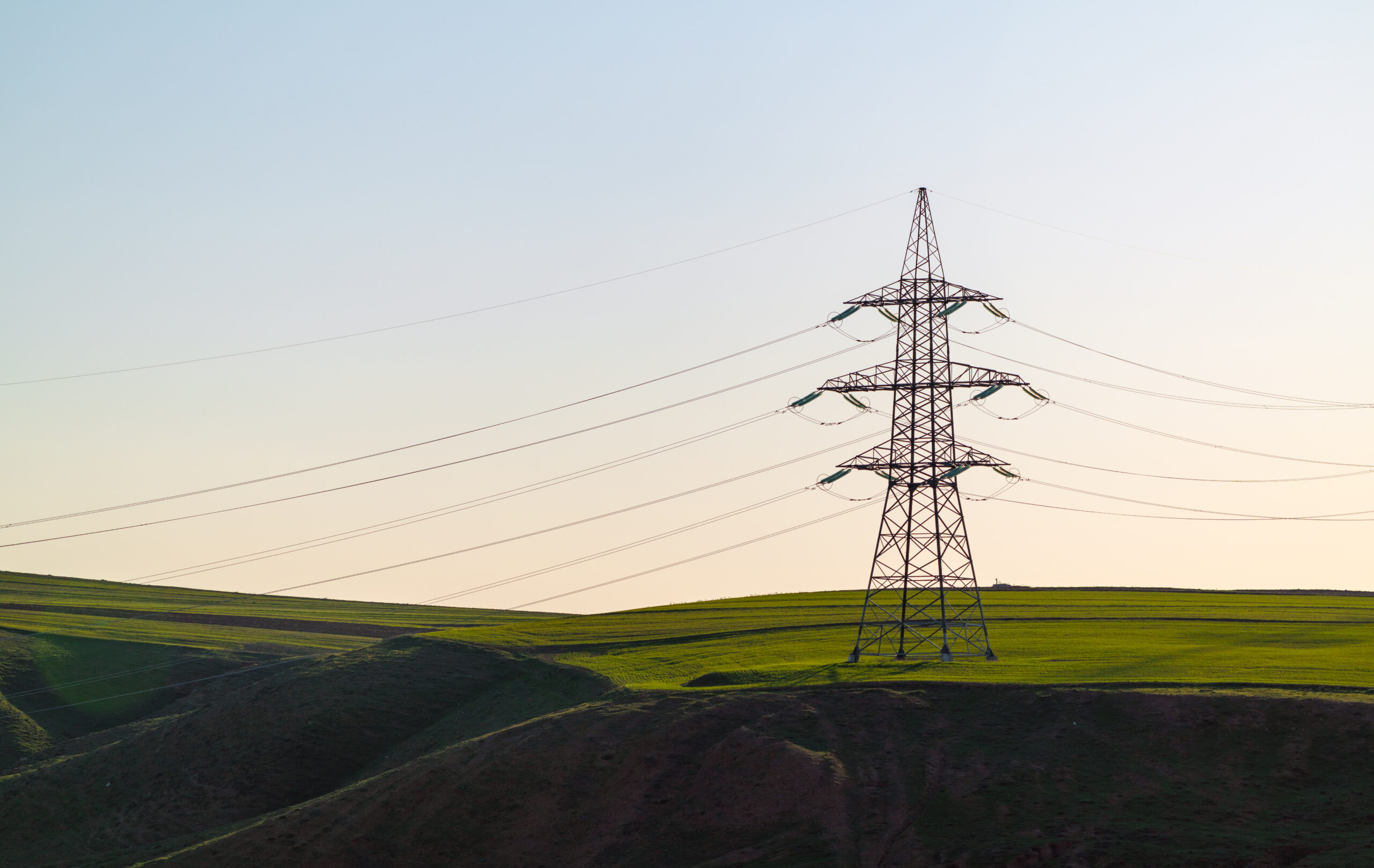
The cost of our energy infrastructure’s lack of capability is sobering when grid capacity bottlenecks impact directly on energy costs. Curtailment is a case in point: where generation (particularly renewable generation) is switched off, often due to grid congestion:
- In Q1 and Q2 2025, 4.6 TWh of UK electricity was curtailed, a 15% increase as compared to the same period in 2024[4]
- A January 2026 report noted that consumers spent £1.5 billion in 2025 to pay for wind farm curtailment[5]
The publication of the Reformed National Pricing (RNP) Delivery Plan builds on, and works towards, Clean Power 2030, with the rationale of a “clean, homegrown power system”, avoiding “rising constraint costs and clean power going to waste.”[6]
While the RNP is “a portfolio of interventions spanning the whole of the power sector”[7], constraints and infrastructure figure prominently in the Delivery Plan, which highlights the historical context of the grid: underinvestment in the network; slow delivery on transmission infrastructure investment; planned and unplanned outages for maintenance and upgrades, and lack of incentivisation for market participants to consider constraints.
How business aligns with policy aims and timescales
There are clear economic and environmental requirements for grid reforms and infrastructure investment if we are to meet UK-wide sustainability targets. And BCC research published in February indicates that upgrades to the distribution network – swift connection to support electrification – for UK economic competitiveness is very much a live issue. BCC are finding that businesses’ growth and sustainability strategies are being stymied by connection delays,
“Some firms have been given connection dates into the mid-30s and beyond. This has a significantly damaging impact on businesses who want to support the transition to renewable energy, or electrify, but are unable to do so because of lengthy connection dates. This issue is likely to intensify…”[8]
In a blog last June, we looked at the dilemmas British businesses face when trying to drive sustainability and electrification in the face of a constrained network supply, and at the energy management technologies that can help businesses meet these challenges. Although the policy landscape – the ambition – has moved forward since then, business challenges are still in flux: even energy resilient organisations are feeling the pressure, and c.60% of respondents to one survey cite supplier / infrastructure limitations, including grid constraints, as an obstacle to reaching Net Zero.[9]
In this context, many forward-thinking businesses are taking control of their own energy infrastructure, to improve energy resilience and to mitigate grid constraints’ impact on their own growth strategies. In the same survey, when respondents were asked about investment in on-site energy generation:
- Energy resilient organisations somewhat likely or very likely to invest – 85%
- Total who are somewhat likely or very likely to invest – 76%
Work towards electrification and navigate grid constraints with Powerstar
At Powerstar, we’ve helped one of the UK’s largest telecoms companies overcome grid constraints. As an energy-intensive company operating in a heavily-constrained region, they wanted to reduce energy consumption while electrifying their vehicle fleet, with rapid charging facilities: to balance sustainability and energy affordability.
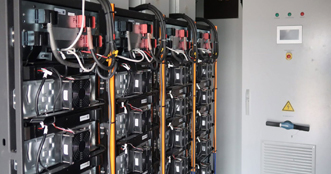
Installing a Powerstar BESS allows for rapid charging for their EV fleet, with optimised voltage output, greater power resilience through integrated UPS, and the opportunity for new revenue streams through grid contracts.
Clean Power 2030 is on the near horizon. But grid constraints are heavily impacting businesses’ ability to drive forward electrification strategies to meet the demands of sustainability and energy resilience. Taking control of your energy infrastructure, with incremental investment in modern energy assets such as BESS, can provide immediate benefits and the confidence to help make the Net Zero journey feasible.
We demonstrate transparent, verified results for clients, helping to ensure resilient power across sectors including manufacturing, food & drink, retail, hospitality & leisure, transport and logistics.
If your business is concerned about grid constraints, and for expert advice on modern energy management technologies to support your sustainability and efficiency ambitions, talk to us today.
[1] https://www.worldenergy.org/assets/downloads/IM26_-_Full_report.pdf?v=1774520921
[2] Ibid.
[3] https://www.britishchambers.org.uk/wp-content/uploads/2026/02/BCC_BRO9891_ENERGY_BILLS_V4_DIGITAL_compressed.pdf
[4] https://www.netzerotc.com/insights/solutions-to-renewable-energy-curtailment-in-scotland/
[5] The Times, How wasted wind is pushing up electricity bills in the UK, 9 January 2026, https://www.thetimes.com/uk/environment/article/wasted-wind-electricity-bills-rbtgnfhwr
[6] https://www.gov.uk/government/publications/reformed-national-pricing-rnp-delivery-plan/reformed-national-pricing-rnp-delivery-plan-accessible-webpage
[7] https://assets.publishing.service.gov.uk/media/69e788feb8bc5eda995ee7c2/reformed-national-pricing-delivery-plan-2026.pdf
[8] https://www.britishchambers.org.uk/wp-content/uploads/2026/02/BCC_BRO9891_ENERGY_BILLS_V4_DIGITAL_compressed.pdf
[9] https://www.centricabusinesssolutions.com/navigating-energy-labyrinth-lp